· Yuhan · Blog · 3 min read
Literature Review: Fundamentals and Future
[Draft version] An introduction to literature review fundamentals and thoughts on AI-assisted and automated approaches for the future
What is Literature Review?
When/Why to do literature review
- Learn about a new topic
- Find a solution to solve a problem or find an answer to a question
- Synthesise existing literature (for newcomers and researchers)
- Identify research gaps or find inspirations for new ideas
- Evaluate a research idea: has anyone done this before? The difference between my approach and others?
How to do a Literature Review?
A literature review usually starts with searching for a few related papers. After reading them, new keywords, important authors, useful methods, or frequently cited papers may emerge. These clues often lead to further searching, more reading, and a more refined understanding of the topic.
In this sense, doing a literature review is an iterative process: searching, reading, understanding, adjusting the search, and repeating.
At some point, the review needs to stop. This may happen when:
- There is enough background knowledge to understand the topic
- A reasonable number of relevant papers has been found
- New searches mostly return papers that have already been seen
- The most important work seems to have been covered
- There is not enough time to continue searching
A literature review can be casual, formal, or highly systematic, depending on its goal and audience. For example, a quick review for understanding a new topic may not need to cover every relevant paper. In contrast, a published survey or systematic review usually needs a clearer search strategy, more explicit inclusion and exclusion criteria, and a more careful explanation of how the literature was selected.
In general, a good literature review should have:
- A clear goal or research question
- A suitable collection of papers: are the collected papers relevant, credible, and representative?
- Exhaustiveness is useful in some cases, especially for systematic reviews, but may not always be necessary as it could be difficult to cover all relevant papers especially when the topic is not too narrow or specific.
- A transparent search and selection process: how the papers were found and why some papers were included or excluded
- High-quality synthesis to achieve the research goal
Systematic Literature Reviews
Literature reviews can take many forms and do not always have to be systematic. However, a systematic approach is often preferred. This is because literature reviews can be affected by subjective choices, such as citing only familiar papers. Systematic reviews aim to reduce these biases by making the search, selection, and inclusion process more explicit and consistent.
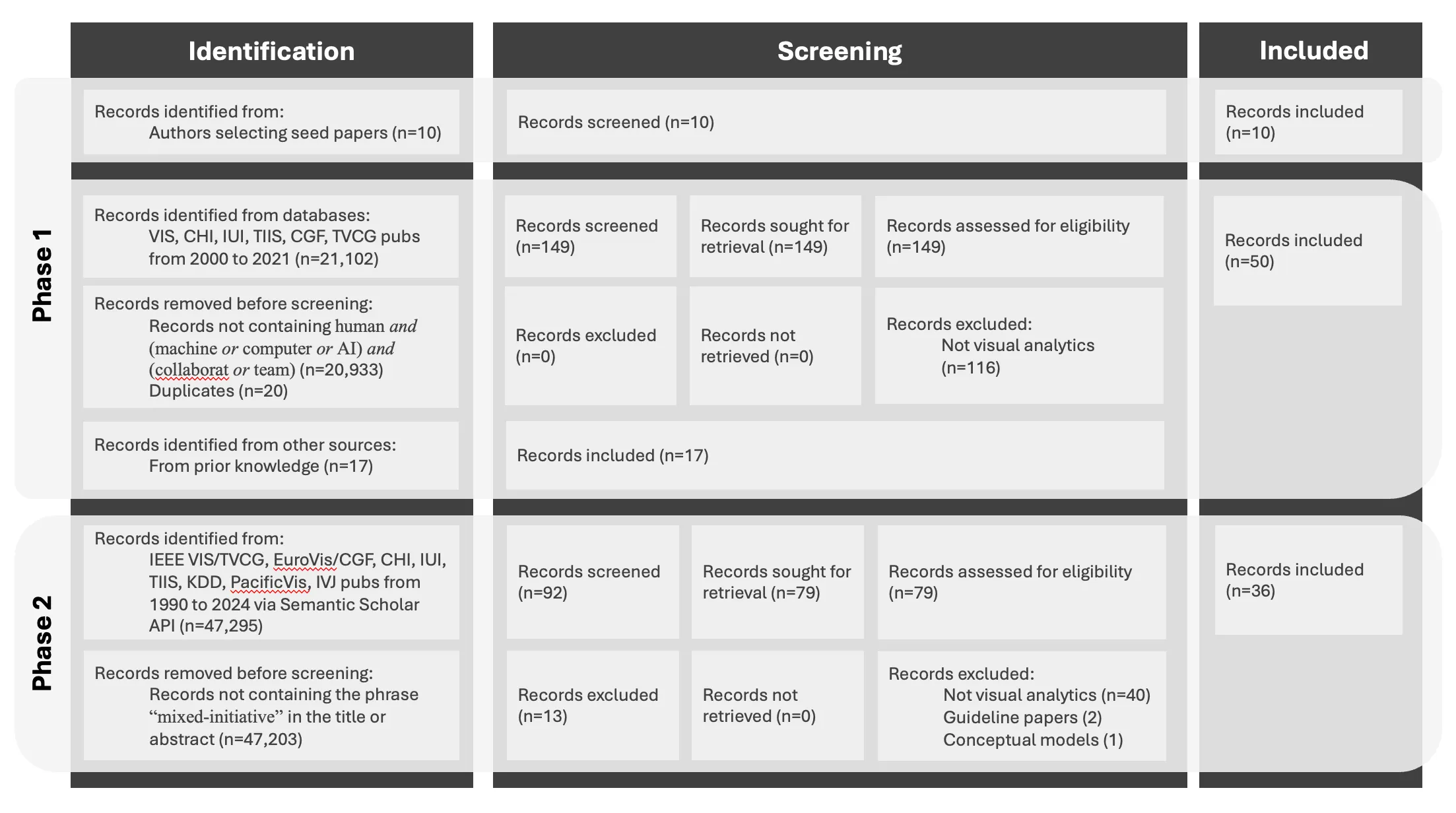
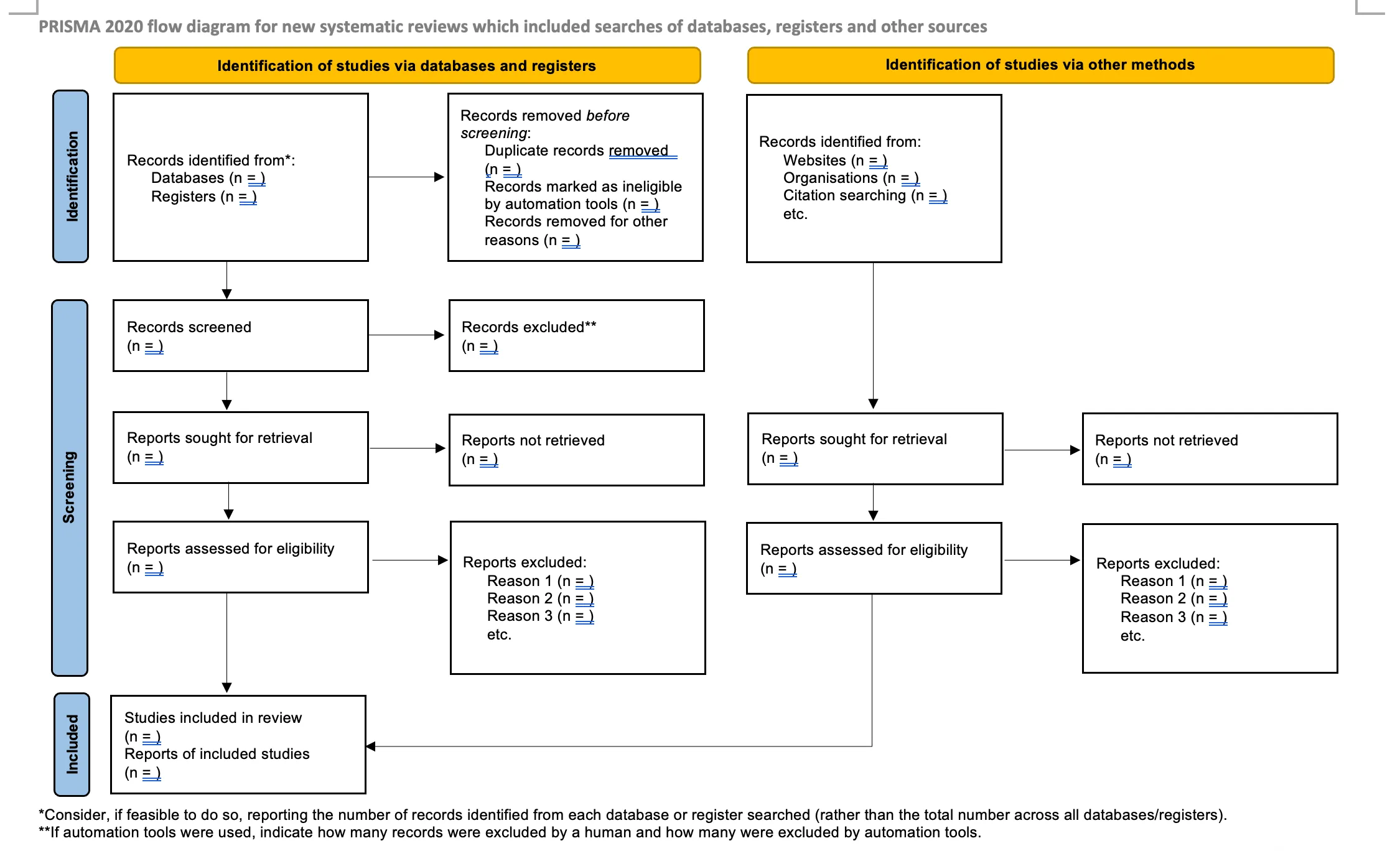
A commonly used guideline for reporting systematic reviews is PRISMA (Preferred Reporting Items for Systematic Reviews and Meta-Analyses). For example, the following figure shows the PRISMA flow diagram for recording the search and screening process.
Critiques on Systematic Review
Systematic reviews often focus on a narrow topic or a specific research question. This makes the review more manageable and the selection criteria easier to define, but it can also leave out papers that are related in a broader sense.
In practice, many papers are excluded early because the search process often relies on keyword choices, database selection, publication venues, and other filters to reduce the amount of literature that needs to be screened by humans.